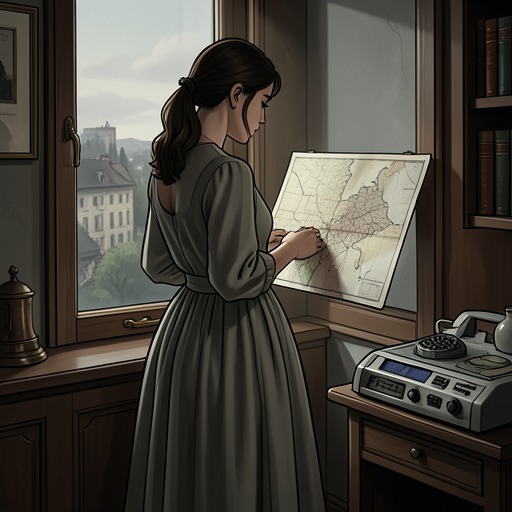
María de Salinas
The Constant PrincessMaría de Salinas is Catalina of Aragon’s best friend and one of the companions who shares her life in England. The book gives little independent information about María, presenting her instead through brief, concrete moments beside Catalina: answering a summons at a dance, whispering concern during a punishing journey, and helping her prepare to go out alone years later. Together, these appearances define a relationship whose importance lies less in public authority than in its persistence across the changing conditions of Catalina’s life.
Place in Catalina’s Household
María belongs to the company Catalina brought with her from Spain. When Catalina reflects on her arrival in an unfamiliar country, she describes having no friends beyond the companions and servants who travelled with her; the account does not name María in that passage, but later establishes that their friendship had existed at home and continued in England. María is thus part of Catalina’s intimate Spanish circle within a household where the princess must learn English expectations and manage the attention directed at her.
The distinction between a household companion and a close friend matters in Catalina’s account. Doña Elvira keeps the ladies in order, and Catalina says she obeys her as she would her mother. María, by contrast, is singled out as her best friend. The two women occupy different positions in the same domestic world: one associated with supervision, the other with personal closeness. The book does not describe María’s duties or give her a separate political role, but it makes clear that she is more to Catalina than one of the women around her.
A Companion in Public and Private
At a court gathering, Catalina decides to dance with her ladies and calls María by name. María comes quickly to stand beside her, before three other young women join them. The moment places the friendship within public performance: Catalina is observed by the English court, and the dance becomes part of the way she inhabits her new position. María’s prompt response makes her the first companion identified in the scene, present at Catalina’s side as the princess turns the occasion into a display of composure and courtly skill.
The contrast between that public scene and Catalina’s private letter to her father reveals a different aspect of María’s importance. Catalina reports that María remains her best friend in England as she had been at home, while also admitting that nothing in England feels like Spain and that she cannot bear María to speak of home. This is not evidence of a falling-out; it conveys the strain of homesickness and the complicated comfort of sharing a past that Catalina cannot always face. María’s closeness makes her a link to home, but that link can also sharpen the pain of displacement.
Care Through Hardship and Change
During a winter journey, Catalina is exhausted and bitterly cold, has hardly eaten, and is expected to continue travelling. María asks in a quick whisper whether she can refuse. Catalina answers that she cannot and rises to go on. The exchange is brief, but it shows María registering the physical cost of obedience and asking whether the princess has any choice. Her concern does not alter the demand placed on Catalina; it gives the hardship a personal witness.
Years later, when Catalina receives a letter she does not wish to share and announces that she is going for a walk, María helps her prepare. She places a patched cloak around Catalina’s shoulders—the same cloak Catalina had worn in the winter when she and Arthur left London for Ludlow, seven years earlier. María then offers to accompany her, though without enthusiasm. Catalina declines. The familiar garment carries the earlier journey into this later moment, while María’s practical gesture connects the two periods of Catalina’s life. Her offer is neither a dramatic intervention nor a claim on Catalina’s confidence: she makes company available, and Catalina chooses solitude.
Narrative Significance
María’s characterization is built from recurrence rather than explanation. The reader sees her respond when called, remain Catalina’s closest friend despite their displacement, voice concern when travel becomes unbearable, and attend to Catalina before a solitary walk. The book does not disclose María’s private thoughts or explain her reservations, including the lack of enthusiasm in her offer to accompany Catalina. Her presence is therefore defined by what the scenes establish, not by an invented account of her motives.
That limited but steady presence gives the friendship particular force. Catalina’s life is repeatedly shaped by roles and obligations: she must represent Spain in England, perform confidence, and endure decisions made around her. María appears not as a political solution to those constraints but as a person familiar to Catalina across settings and years. The cloak she puts around her friend’s shoulders makes that continuity tangible: the garment recalls an earlier journey, while the gesture belongs to the present. In a narrative often concerned with public titles and dynastic claims, María’s small acts of companionship mark the persistence of a private bond.